


The Circle of Fifths helps guitarists visualise key relationships, making it easier to create expressive chord progressions and choose moods for songs. By mapping the circle on the guitar neck, musicians can quickly spot which major and minor chords work together, smoothly shift keys, and experiment with new progressions or tonalities. Using this tool, guitarists can overcome creative blocks and add emotional depth to their music. Exploring additional techniques with the circle opens further songwriting possibilities.
Table of content
Introduction
Key Takeaways
What Is the Circle of Fifths: And Why Should Guitarists Care?
See the Circle of Fifths on Your Guitar Neck
How to Match Chords and Keys for Songwriting
Pick Keys for the Right Mood
Identify Major and Minor Chords Using the Circle
Build Song Progressions With the Circle of Fifths
Write Songs With Classic Circle of Fifths Progressions
Transpose Any Song Easily With the Circle
Modulate Between Keys for Creative Songwriting
Swap Chords for Fresh Guitar Sounds
Circle of Fifths Practice Drills for Guitar Songwriting
Circle of Fifths Songwriting Hacks for Overcoming Writer’s Block
Frequently Asked Questions
Conclusion
Key Takeaways
The Circle of Fifths visually maps out major and minor key relationships, simplifying chord selection and progression building for guitar songwriting.
Practising chord shifts between adjacent keys on the Circle enhances fluency and inspires creative chord progressions on the guitar.
Use the Circle to identify common and substitute chords, enabling quick modulation and varied song structures.
Selecting keys and progressions from the Circle helps evoke specific emotional tones and moods in your songwriting.
Employ the Circle as a songwriting tool to overcome writer’s block by easily discovering new chord combinations and key changes.
What Is the Circle of Fifths: And Why Should Guitarists Care?
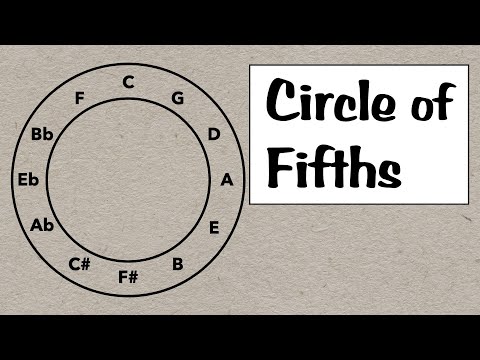
The Circle of Fifths serves as a visual tool that maps out the relationships between major and minor keys, offering guitarists a straightforward method to identify key signatures and chord progressions.
By organising keys in a circular pattern, the Circle simplifies the process of understanding how major and minor scales relate. Moving clockwise around the Circle adds sharps to key signatures, while moving counterclockwise introduces flats, making transposition intuitive.
Each major key aligns with its relative minor inside the Circle, allowing guitarists to explore harmonic relationships and chord variations with ease.
Recognising common chord progressions, like I-IV-V or I-vi-IV-V, becomes more accessible. An understanding of the Circle ultimately enhances improvisation, songwriting, and the ability to create dynamic, engaging music.
See the Circle of Fifths on Your Guitar Neck
A practical approach to internalising the **Circle of Fifths involves mapping its sequence of major chords directly onto the guitar neck. Starting with C major, guitarists can move clockwise through the Circle of Fifths—G, D, A, E, and B—by locating each major chord’s root across the fretboard. This process highlights the interval of a fifth between each chord and clarifies their spatial relationships on the guitar neck. Each major chord also pairs with a corresponding minor chord, such as C major with A minor or G major with E minor, showcasing diatonic relationships. Practising shifts between adjacent chords in the Circle, and experimenting with chord progressions like I-IV-V, directly on the fretboard, helps guitarists build fluency and support creative songwriting. Additionally, understanding rhythm's role in shaping musical structure can greatly enhance your songwriting experience.
How to Match Chords and Keys for Songwriting

Building on the ability to visualise the Circle of Fifths across the guitar neck, songwriters can further enhance their craft by matching chords and keys with intention. The Circle of Fifths provides a visual reference to quickly identify key signatures, including the number of sharps or flats.
Once the key is established, the major scale reveals both primary major chords and their associated minor chords, forming the foundation for common chord progressions such as I-IV-V or I-vi-IV-V. Songwriters can use these patterns to create cohesive and familiar harmonic structures.
Additionally, the Circle suggests chord substitutions—like swapping a major chord for its diminished counterpart—to introduce tension or variation. Exploring movement to neighbouring keys on the Circle allows seamless modulation while preserving related chord relationships within the song structure. Emotional resonance transforms melodies and words into lasting experiences, enhancing the overall impact of the songwriting process.
Pick Keys for the Right Mood
How can songwriters evoke specific emotions through their music? The answer often lies in the choice of key. Major keys, such as C, G, and D, are commonly associated with happiness and brightness, making them suitable for uplifting or energetic songs.
In contrast, minor keys like A minor and E minor tend to evoke sadness, introspection, or a sense of longing. By using the Circle of Fifths, songwriters can easily visualise and select keys that align with their desired mood, as well as explore related keys for subtle emotional shifts.
Additionally, experimenting with less common keys—such as G# minor or C# major—can introduce unique tonal colours, expanding the emotional palette available for songwriting and helping to craft a distinct musical atmosphere. Understanding Apple Music royalties can also inform choices about releasing music in different keys to maximise audience engagement and revenue.
Identify Major and Minor Chords Using the Circle

Once the mood of a song is chosen through key selection, the next step involves identifying which chords naturally fit within that key. The Circle of Fifths provides guitar players with a clear layout of both major and minor chords. Major chords are displayed on the outer edge of the Circle, while their corresponding minor chords appear on the inner edge beneath them.
For instance, C major aligns directly with A minor, making it easy to locate related chords for a specific key. Each major key contains a distinct set of diatonic chords, such as G, A minor, B minor, C, D, and E minor in G major. Understanding chord progressions can further enhance your songwriting by allowing you to create smooth transitions between these chords.
Build Song Progressions With the Circle of Fifths
Utilising the Circle of Fifths, songwriters can craft effective chord progressions by starting with the chosen key and exploring the surrounding chords on the Circle. Adjacent chords—typically the IV and V—offer natural harmonic resolution, as seen in classic progressions like I-IV-V.
To introduce emotional depth, the relative minor chord (vi) can be incorporated, yielding a I-vi-IV-V progression that shifts the song’s mood while maintaining cohesion. Exploring secondary dominants—such as temporarily borrowing a dominant chord from a neighbouring key—adds unexpected tension and richness.
By regularly practising these techniques and shifting progressions to new keys using the Circle of Fifths, songwriters expand their creative options and fluency. Moreover, understanding rhythmic feel can enhance the overall impact of the chord progressions you create.
Leverage adjacent chords for smooth progression
Integrate the relative minor for tonal variety
Experiment with secondary dominants for added tension
Write Songs With Classic Circle of Fifths Progressions
Building on the techniques for constructing progressions with the Circle of Fifths, songwriters often turn to classic chord patterns that have shaped countless popular songs.
Progressions such as I-IV-V (C-F-G) and I-vi-IV-V (C-Am-F-G) form the backbone of many hit tracks, providing a familiar and accessible foundation for songwriting.
Another widely used sequence, the I-V-vi-IV progression (G-D-Em-C), is notable for its uplifting sound and prevalence in pop music.
For those seeking a jazzier feel, the ii-V-I progression (Am7-D7-Gmaj7) offers smooth chord shifts within the Circle of Fifths framework. Additionally, utilising shorter albums can enhance listener engagement and make your songwriting more impactful.
Transpose Any Song Easily With the Circle
Transposing songs becomes straightforward when using the Circle of Fifths as a visual guide. This tool visually maps out the relationships between key signatures, enabling musicians to transpose songs by shifting chord progressions while keeping their original structure intact.
To transpose, one first locates the song’s current key on the Circle of Fifths, then counts steps clockwise or counterclockwise to reach the target key. By using this method, the intervals between chords remain consistent, ensuring the song retains its musical character.
For instance, a progression in C major (C, F, G) transposed to D major (D, G, A) is achieved by moving one step clockwise.
Identify the current key and its chord progressions
Locate the new key signature on the Circle of Fifths
Shift each chord accordingly to transpose accurately
Understanding chord progressions is crucial for effective transposition, ensuring that the emotional impact of the song is preserved.
Modulate Between Keys for Creative Songwriting
Modulating between keys is a powerful way to add interest and contrast to a song, and the Circle of Fifths offers a clear roadmap for smooth shifts.
Songwriters can use techniques such as pivot chords and secondary dominants to create seamless or dramatic key changes, depending on the desired effect.
Exploring these methods helps achieve both subtle shifts and bold moments within a composition.
Smooth Modulation Techniques
While many songs remain rooted in a single key, creative songwriting often benefits from smooth key changes that add interest and emotional depth. The Circle of Fifths is a valuable tool for achieving seamless modulation between keys, especially when shifting between neighbouring keys.
By utilising chords that are common to both the original and target keys—known as pivot chords—songwriters can create a fluid shift that feels natural to the listener. Incorporating relative minors offers additional colour and emotional nuance without disrupting the song’s coherence.
Chromatic movement and secondary dominant chords further enhance modulation possibilities, providing subtle or dramatic shifts as needed.
Use pivot chords to bridge two keys within the Circle
Shift through relative minors for emotional variety
Employ chromatic movement or secondary dominants for added tension
Key Changes for Impact
Building on techniques for smooth modulation, songwriters often seek ways to use key changes deliberately for dramatic effect. Modulation can shift the emotional terrain of a piece, offering contrast and surprise.
By changing the key signature at pivotal moments, such as a chorus or bridge, a songwriter can create heightened impact. For example, moving from C major to G major—a neighbouring key on the Circle of Fifths—feels natural while still providing a fresh sound.
Utilising common chords as pivot points, such as shifting from C major to A minor, guarantees a seamless flow. Conversely, more unexpected key changes, like jumping from E minor to B major, can introduce tension and excitement.
Strategic modulations give compositions memorable moments and emotional depth.
Swap Chords for Fresh Guitar Sounds
Revealing new sonic textures on the guitar often begins with creative chord substitutions using the Circle of Fifths. By applying music theory concepts, guitarists can transform standard chord progressions into something unexpected.
Swapping a diatonic major chord with a relative minor chord—such as replacing G major with B minor—instantly shifts the mood and emotional colour. Utilising secondary dominants, like D7 instead of D major, introduces tension and surprise within the progression.
Modal interchange allows major chords to be exchanged for their minor counterparts, such as substituting C major with A minor, offering fresh harmonic possibilities. Additionally, borrowing chords from neighbouring keys or using chord inversions can expand the palette for songwriting.
Substitute major chords with minor chords for mood shifts
Use secondary dominants to add harmonic tension
Combine chords from adjacent Circle of Fifths keys
Experimenting with creative chord substitutions can lead to unexpected musical results.
Circle of Fifths Practice Drills for Guitar Songwriting
Releasing the creative potential of the Circle of Fifths requires hands-on practice that strengthens both theoretical understanding and practical guitar skills.
Guitarists can start by identifying all major and minor chords within a selected key, such as pinpointing the I-IV-V chords in C Major (C, F, G), and constructing simple chord progressions. Practising these progressions with a metronome and varying strumming patterns helps develop rhythmic creativity.
Setting a 10-minute timer to craft a melody using only in-key chords, like those in G Major (G, C, D, Em), encourages efficient songwriting.
Exploring chord substitutions, such as swapping the I chord for its relative minor, reveals new emotional textures.
Transposing progressions between keys using the Circle of Fifths further sharpens chord relationships and songwriting versatility. Additionally, understanding direct fan communication can help artists gauge which melodies resonate best with their audience.
Circle of Fifths Songwriting Hacks for Overcoming Writer’s Block
When creative ideas stall, the Circle of Fifths offers practical shortcuts like quick chord progression maps and instant key change tricks to break through writer’s block. By visually mapping out adjacent chords or shifting to a neighbouring key, songwriters can generate fresh progressions with minimal effort. These techniques provide immediate pathways to new melodies and harmonies, making it easier to restart the songwriting process. Additionally, understanding target audience can help tailor your music to connect more deeply with listeners.
Quick Chord Progression Maps
Unleashing fresh ideas during a songwriting session often starts with rapid chord progression mapping, and the Circle of Fifths provides a practical shortcut. By visually identifying adjacent chords, songwriters can move quickly between progressions in any key, such as shifting from the key of C to D major without hesitation.
This approach streamlines the music creation process, making it easy to experiment with classic sequences like I-IV-V or I-vi-IV-V, which are staples in Guitar Tricks lessons. Borrowing secondary dominants or substituting chords, such as Cmaj7 for C or Dm for F, adds subtle variation and emotional depth.
The Circle of Fifths empowers writers to overcome creative blocks by presenting endless chord progression possibilities at a glance.
Experiment with I-IV-V in the key of C (C-F-G)
Substitute chords for unique sounds (Cmaj7, Dm)
Borrow secondary dominants (E7 resolving to Am)
Instant Key Change Tricks
Break through creative stagnation by utilising instant key change tricks with the Circle of Fifths. By referencing the circle, songwriters can seamlessly shift between keys such as C and the key of G, introducing fresh tonal environments.
Progressions using the circle become especially dynamic when moving a whole or half step, instantly altering the song’s mood and tension. For example, a standard I-IV-V progression in C can be quickly reimagined by moving to the key of G, providing a new emotional context.
Borrowing secondary dominants from adjacent keys or using chord substitutions based on the circle adds unexpected colour and energy. These instant key change tricks help overcome writer’s block, allowing for unique variations and keeping compositions engaging and unpredictable for both the writer and listener.
Frequently Asked Questions
How to Use Circle of Fifths for Songwriting?
One can use the Circle of Fifths for songwriting by identifying melodic progressions, exploring chord substitutions, and facilitating key modulation. This visual tool also inspires lyrical inspiration by suggesting emotional shifts through major and minor chord relationships within each key.
What Is the 80/20 Rule in Songwriting?
The 80/20 rule in songwriting states that 80% of a song’s impact often comes from 20% of its melodic structure, lyrical themes, chord progressions, or song dynamics, highlighting the importance of focusing on key musical elements.
What Is the 80/20 Rule in Guitar?
The 80/20 rule in guitar asserts that mastering 20% of key elements—such as common chord progressions, key signatures, musical intervals, and harmonic relationships—yields 80% of overall playing proficiency, accelerating both learning and creative development.
What Is the Rule of 3 in Songwriting?
The rule of 3 in songwriting states that grouping elements such as song structure, lyrical themes, chord progression, or melodic hooks in threes creates memorability. This technique enhances emotional impact, listener engagement, and the overall cohesion of a song.
Conclusion
The circle of fifths is a powerful resource for guitarists seeking to expand their songwriting abilities. By understanding its structure and applying it to the fretboard, musicians can confidently choose keys, modulate between them, and experiment with fresh chord progressions. Whether aiming to evoke a specific mood or overcome creative ruts, the circle of fifths offers practical guidance. Ultimately, mastering this tool helps guitarists access greater musical creativity and versatility in their songwriting journey.
Subscribe to our newsletter
Stay updated with the latest Muso news, tips, and success stories. Subscribe to our newsletter and never miss an update!


